An essential sector for Australia’s future
Australia’s waste and resource recovery sector provides essential services that protect community health and wellbeing, improve national productivity, reduce supply chain risks and cut greenhouse gas emissions.
These benefits make the sector a strategic national asset. With the right policy and investment settings, it can deliver even greater value—creating jobs, building sovereign capability, strengthening markets for recovered materials and helping Australia achieve a more circular, low-carbon economy at the lowest possible cost.
For too long, waste and resource recovery has been viewed primarily through a regulatory and environmental lens. While effective regulation remains essential, the sector must also be recognised as an industry to be enabled—one capable of attracting investment, supporting innovation and expanding the infrastructure Australia needs.
Our future prosperity cannot rely on extracting new resources alone. A resilient economy must also recover, retain and reuse the valuable materials already in circulation. If Australia is serious about net zero, circularity, economic resilience and secure access to critical materials, it must be equally serious about supporting the sector that helps deliver all four.
WMRR provides trusted information and industry insight across the priority areas shaping our sector. By making these issues clear and accessible, we help businesses, governments and communities better understand, value and support the essential services our members provide.
The information presented here reflects the most current data available and will be reviewed and updated as new data becomes available.
The Waste Management Heirarchy
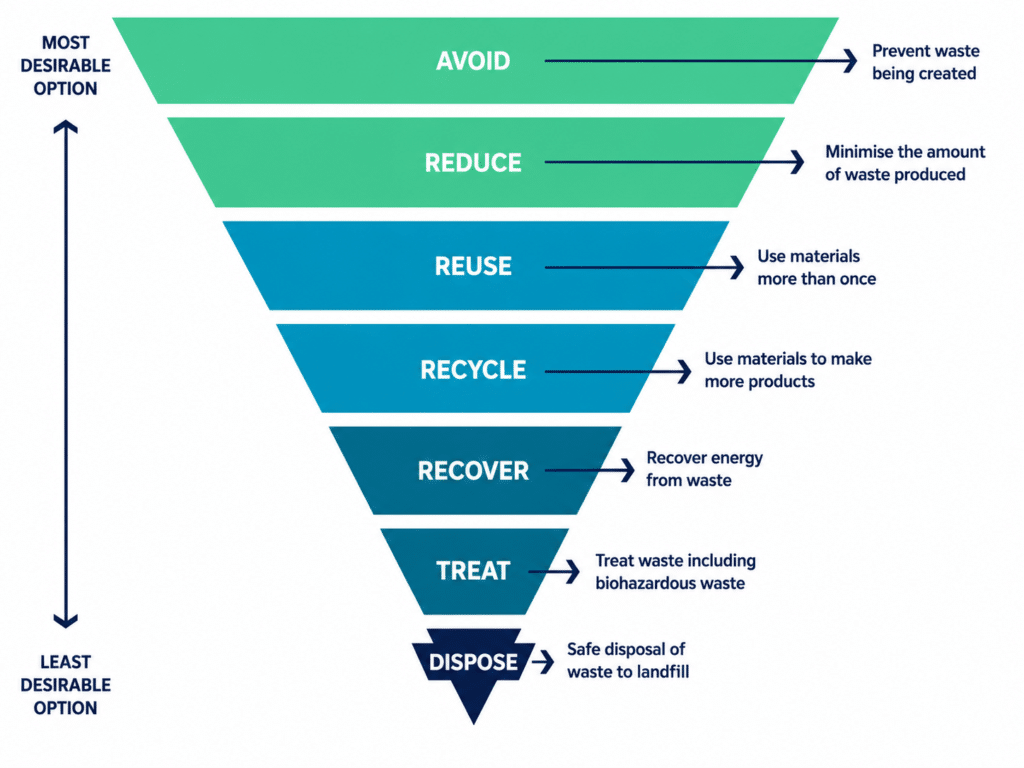
The waste management hierarchy, which is embedded in state and territory policy frameworks, is a set of priorities for the efficient use of resources.
There are three main categories:
- Avoid – always the most preferable outcome, waste avoidance measures result in less waste being generated
- Resource recovery – this includes re-use, recycling, repurposing, remanufacturing and energy recovery consistent with the most efficient use of recovered resources
- Disposal – including management of all disposal options in the most environmentally responsible manner
Avoid
The highest priority in the waste management hierarchy is avoidance.
Not creating material in the first place is the best thing for the environment. Reducing the amount of material created is the next most preferable because it means less is used. These two items in the hierarchy discourage the creation of new virgin material, maximise the efficiency of material already created, and minimise unnecessary consumption.
Examples include avoiding the consumption of unnecessary goods, avoiding single use materials or disposable items, selecting goods with little or no packaging, and buying products that are recycled, contain recycled material, or are reusable.
For businesses, examples can include switching from single use to reusable items and reviewing procurement policies to embed circularity.
For the community, examples include using a refillable drink bottle, not taking disposable cutlery with takeaway lunch, and purchasing loose fruit and vegetables rather than the packaged items.
Resource Recovery
The next priority is resource recovery, which includes re-use, recycling, remanufacturing and energy recovery.
In instances where avoidance or reduction is not possible, the next most preferred option is re-use where the material does not require any form of reprocessing. This avoids the cost of energy, water and other resources required for recycling. It includes repair, resale and donation (of unwanted clothes or toys for example).
Recycling involves the processing of discarded materials to make new products. They may be the same or different products. This keeps materials in the productive economy and benefits the environment by decreasing the need for new virgin materials.
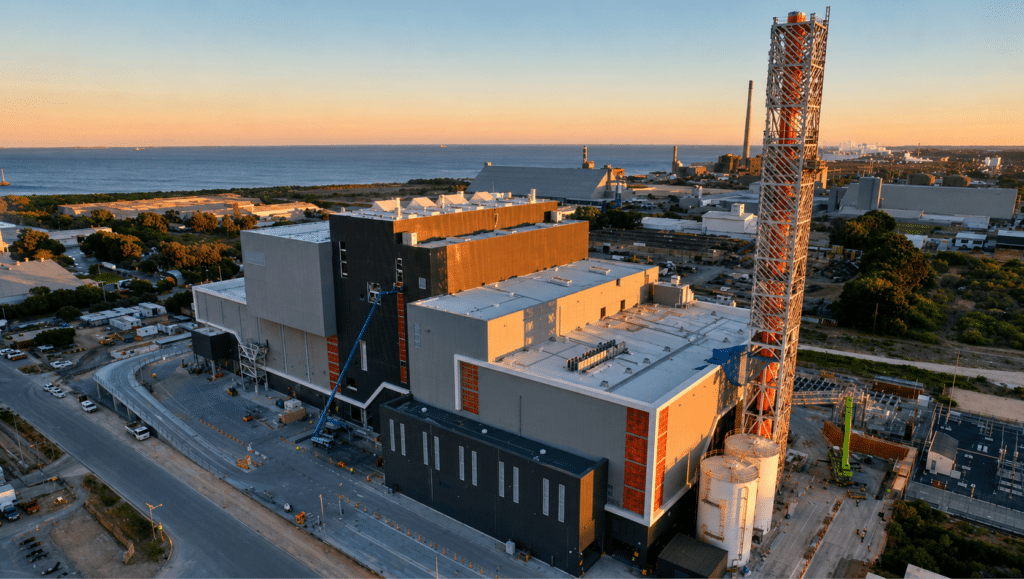
For material that cannot be recycled or re-used, it may be possible to use it for energy recovery (known as energy from waste or waste to energy). This decades-old proven technology diverts material from landfill, creates reliable and consistent baseload power, and reduces greenhouse gas emissions by reducing new resource extraction
Treatment or Disposal
There are some types of waste that cannot be safely recovered, such as hazardous chemicals, some medical waste and asbestos. For these, disposal is the safest and most appropriate management option.
WMRR’s Current Priority Areas of Interest